Speech-language pathologists, audiologists, and hearing language dispensers have a great deal of responsibilities to their patients. Consequently, they undergo extensive training to qualify for their chosen career. If you are one of these professionals, there is no doubt that you have invested so much time and significant resources into your career. Thus, you hope you will practice for many years to come.
Unluckily, should someone register a complaint against you, your license could face the risk of revocation. At Riverside License Attorney, we are ready to assist you in protecting your license if the need arises. If you learn that your licensing board is investigating your license, call us immediately. Regardless of where you work in Riverside, CA, or the neighboring areas, there is only one truth: when the board initiates an investigation against you, things can unfold disastrously fast.
Speech-Language Pathologist Duties
A speech-language pathologist (SLP) is also called a speech therapist. They are a special type of healthcare professional who diagnoses, treats, and assesses a wide array of communication and swallowing disorders. This professional works with patients of all ages.
Usually, patients with issues related to their language, speech production, cognitive communication, and swallowing capabilities are referred to speech therapists. The general functions of SLPs are as follows:
- Conduct speech-language evaluations and determine speech-language goals in patients’ care plans
- Providing group or individual counsel to assist in building speech-language skills
- Providing information regarding other resources or, if necessary, referrals to other healthcare professionals
- Championing the communication requirements of everyone, including those with hearing loss.
Audiologist Duties
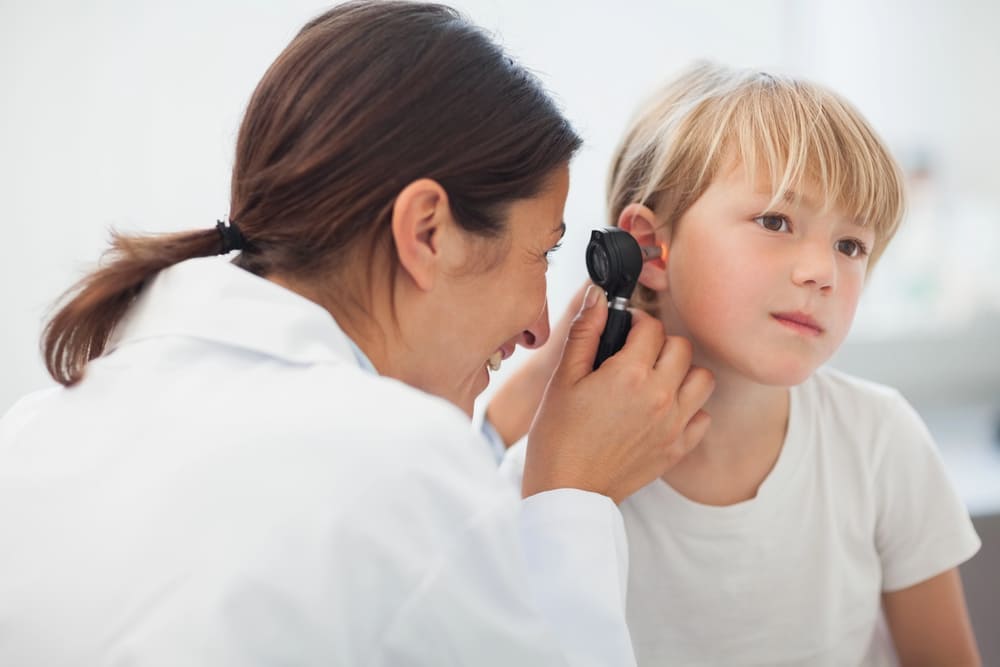
An audiologist refers to a medical care professional specialized and trained to treat and diagnose balance and hearing disorders. Their primary roles include the following:
- Assessing a patient’s capability to process auditory information, including temporal processing, sound discrimination, and localization.
- Utilize advanced diagnostic techniques and tools to pinpoint specific deficits in sound processing.
- Develop personalized auditory training programs to solve the sound processing challenges.
- Suggest using assistive listening devices, such as FM systems or hearing aids, to improve the patient’s ability to access and understand auditory information.
- Assess the effectiveness of assistive listening devices and auditory training programs in improving patients’ functional communication skills.
- Continuously monitor the patient’s progress and make the necessary adjustments to the intervention plan as required.
Hearing Aid Dispenser Duties
A hearing aid dispenser is a healthcare professional who connects patients with hearing loss to technology that can alter their quality of life. They help patients reconnect with the world of sound via individualized care and technical knowledge. Enhancing hearing is a process that requires not only the right technology, but it also necessitates the guidance of an expert hearing aid dispenser who appreciates the science of hearing and the desire of people to communicate.
Generally, hearing aid dispensers deal directly with hearing aids plus related equipment. Depending on their clients’ personal preferences, they conduct hearing tests, examine the findings, and recommend proper hearing solutions. Unlike many other healthcare professionals, a hearing aid dispenser focuses solely on nonmedical hearing improvements by fitting devices appropriately.
Their skill enables them to match patients with the exact right level of style, technology, and features necessary for maximum benefit. Additionally, they continuously interact with patients, offering assistance and making adjustments as needed throughout the hearing aid’s lifespan.
The Function of California Speech-Language Pathology & Audiology & Hearing Aid Dispensers Board (SLPAHADB)
The SLPAHADB is the board that regulates hearing aid dispensers, speech therapists, and audiologists in the state of California. Part of the board’s regulatory functions includes licensing the professionals who satisfy minimum competency standards. To work in any of these professions within California, the SLPAHADB must issue you a license after a comprehensive exam and written tests.
Other functions include the following:
- Promulgating laws and regulations governing the practices of the mentioned professions
- Enforcing and administering California law governing these professions
- Issuing, renewing, suspending, and revoking the licenses of professionals mentioned
- Imposing disciplinary sanctions, whenever necessary
The SLPAHADB acts to safeguard California consumers. Its objective is to ensure professionals meet minimum standards of competency. Consequently, it can stipulate new regulations and enforce those already in place.
Every year, the SLPAHADB receives hundreds of complaints, including public complaints, mandated self-reports, required court reports, and reports by other licensing boards. It then must handle these complaints accordingly and take the necessary action.
Common Allegations Brought to the SLPAHADB
The following are the most prevalent accusations made against speech therapists, audiologists, and hearing aid dispensers:
- Professional misconduct
- Negligence, gross negligence, or incompetence
- Alcohol or drug abuse, especially while still working. This may lead the board to question your ability to perform your job perfectly.
- Conviction for a crime significantly associated with the duties, functions, and qualifications of these professions
- Sexual misconduct with patients
- Insurance fraud, for example, up charging insurance
- Practices of fraudulent billing or unnecessary treatments
- Failure to satisfy continuing education requirements
- Continuing education fraud
- False advertisement
- Misrepresenting credentials
- Overcharging patients
Simply being accused of one of the above acts can damage your reputation. The board may also decide to suspend or revoke your professional license and your capability to earn a living due to any of these allegations.
The SLPAHADB Disciplinary Process
The disciplinary process against a speech-language pathologist, audiologist, or hearing aid dispenser starts when the SLPAHADB receives a complaint against the license holder or applicant.
When the SLPAHADB receives a complaint against you, it will first determine if that complaint falls under its jurisdiction. If it does, it may send the matter to its investigation unit for further investigation. The board then informs you of the investigation through a notice of investigation. During the probe, the board investigator may contact you to request information or to conduct a formal interview. Please note that you should not attempt to deal with the board investigator alone. A skilled legal counsel can assist you in presenting your side of the story.
Based on the outcome of the investigation, the board might opt to:
- Close the case due to insufficient evidence
- Issue a citation or cease and desist letter
- Refer the matter to the attorney general’s office for action if there is sufficient evidence
If the matter is sent to the attorney general’s office, the attorney general may file an Accusation if you are a license holder or a Statement of Issues if you are a license applicant. Filing either of these two documents initiates an official administrative hearing process per the California Administrative Procedures Act.
You have just fifteen days to file a Notice of Defense in response to the Accusation or Statement of Issues you have been served. If you fail to file your response within this period, the board might render a default order against you, leading to your license revocation.
If you respond to the Accusation or Statement of Issues against you, the attorney general’s office will schedule a hearing at the Office of Administrative Hearing, presided over by an administrative law judge (ALJ). During this hearing, both sides (the board and defense side) will be allowed to subpoena and present witnesses, submit evidence that supports their arguments, and table documentary exhibits. At the end of the case, the ALJ will review the evidence provided and make their recommendations to the board.
The ALJ may recommend to the board that you are guilty and should face disciplinary action. They may recommend the disciplinary action you should face to the board. However, the board has a broad discretion to accept, modify, or decline the ALJ’s recommendations of a disciplinary action. If it declines the ALJ’s suggestions, it will impose its own disciplinary action. If the ALJ recommends that you have not committed any violation, the board may have no other option but to not impose any discipline against you.
Disciplinary actions imposed after the administrative hearing, if you are found guilty, might include the following:
- Public reprisal
- License surrender
- License probation
- Issuance of a conditional license
- Denial of an application
- License suspension
- License revocation
Petition for License Reinstatement or Reduction of Penalties
If the board has suspended your license, it does not necessarily mean you are locked out of your career. After a given period, you qualify to request the board to issue you your license again. Additionally, you can typically ask that the probation terms and conditions be terminated early or modified. Evidence of rehabilitation or mitigating circumstances may contribute to a positive outcome.
How a Criminal Conviction Can Impact Your License
A conviction of a crime substantially connected to the duties, functions, and qualifications of speech therapists, hearing aid dispensers, or audiologists can lead to the board imposing discipline against you. This includes felony or misdemeanor offenses. Examples of prevalent offenses the board may consider substantially connected to the duties, functions, and qualifications of your profession include the following:
- DUI of alcohol or drugs
- Sexual assault or battery
- Domestic abuse
- Petty theft
- Grand theft
- Drug possession for sale
- Drug possession for personal use
- Insurance fraud
- Embezzlement
Generally, after the district attorney formally accuses you of a crime, they will inform the board. The board might then inform the criminal court to impose some limitations on your professional license. This is true even if the court is yet to determine whether you are guilty of the supposed crime. The restrictions that the board may request the criminal court to impose might be as follows:
- The board might request that the court include license restrictions in the bail conditions to prevent you from continuing with substandard or unsafe practices once you are released from custody.
- The board may request the criminal court to suspend your professional license pending the outcome of your case.
- The board might request that license suspension be part of your sentence should you be convicted at trial.
If your lawyer can respond to the board’s orders to the criminal court, you may be able to avoid the above-mentioned restrictions on your license if convicted of a crime. An aggressive lawyer may also successfully persuade the court to drop the charges against you or lower them to a lighter offense, carrying less severe consequences.
How an Experienced Lawyer Can Help Protect Your License
After you have received a notice of Accusation, Statement of Issues, or investigation from the board, license suspension or revocation does not come automatically. With proper representation from your lawyer, you may be able to avoid harsh disciplinary actions by the board. If you do not avoid disciplinary action altogether, the board will impose lenient penalties, allowing you to retain your license and continue your career.
The following are steps your lawyer can take to assist you in protecting your license upon the SLPAHADB receiving a complaint against you:
- Review the case against you and identify any procedural mistakes
- Negotiate with the board for the most favorable outcome
- Presenting mitigating factors that can persuade the board or the ALJ to grant the best possible outcome for your case
- Helping you subpoena eyewitnesses to appear at the administrative hearing of your case
- Argue the evidence to assist in challenging the accusations against you
- File an appeal if you are not content with the ALJ’s verdict
This said, you cannot ignore the importance of a lawyer in your case. If it is impossible to dismiss your case, your lawyer can help you obtain lenient discipline, including probation. If your license is placed on probation, you can continue practicing, although with various restrictions. This is much better than having your license revoked or suspended, as it would prevent you from practicing your profession.
Contact a Knowledgeable Professional License Defense Lawyer Near Me
As a licensed audiologist, speech therapist, or hearing aid dispenser, you have rights that protect you. One of your rights is to consult an experienced professional license defense lawyer if you have been accused of any violation. Seeking counsel from a lawyer skilled in audiology, hearing aid dispensing, and speech-language pathology can immediately assist in protecting your career and reputation.
At Riverside License Attorney, we will represent you from the beginning of your case until its end. We will help you respond to the board’s investigator or a request for information so you do not say something self-incriminating. We will also help you answer every question, provide the necessary evidence or documentation, and defend you during the administrative hearing. Since every case is unique, our defense strategies are tailored to each case. Contact us at 951-410-8612 for a cost-free consultation.